Nvidia's First Results Without Huang!

Five days ago, Jensen Huang stepped down as head of the company he had led for 33 years. Today, Nvidia $NVDA reported results for the first time without him. The quarter was presented by Colette Kress, who is now both interim CEO and CFO. Huang's name did not appear even once in the press release.
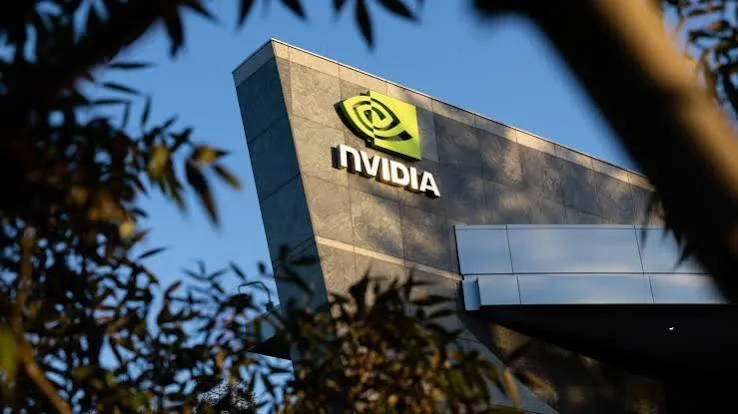
The market was waiting for an answer to one question: did demand leave with Huang? It didn't. Revenue of $115.8 billion is 103% higher than a year ago, beat consensus and the company's own guidance, and the outlook for next quarter is above estimates. The stock, which entered the results roughly 36% below its October high, gained around 3% in after-hours trading.
Under the record revenue, the quality of that growth is changing. Receivables have more than doubled since January, the company guarantees $118 billion in third-party obligations, and it holds stakes in other companies worth more than $100 billion, some of which are its own customers. None of this is a problem yet. But these are exactly the kinds of numbers investors have overlooked for the longest time, and at the highest cost, in the past.
What the results really showed
A beat, as always
Revenue of $115.8 billion, up 103% year over year and 20% quarter over quarter. In August, Nvidia guided for $108 billion ± 2%, and the market expected around $109 billion. So the company beat the upper end of its own guidance by about $5.7 billion. Adjusted earnings per share were $2.68, versus expectations of $2.48. Net income under accounting standards (GAAP) was $65.3 billion.
For the first nine months of the fiscal year, Nvidia has revenue of $293.7 billion, double last year's figure. If it meets its fourth-quarter outlook, the full fiscal year will end at around $424 billion.
Data centers generated $107.6 billion, up 110% year over year, and account for 93% of the entire company. Nvidia has also changed how it reports results. Instead of gaming, professional and automotive segments, it now lists just one other segment, Edge Computing, with $8.2 billion (+42% year over year). For investors, that means less detail. The press release also omits the breakdown between computing chips and networking components.
The riskiest customers are growing fastest
In August, Nvidia first split data centers into two groups. The first is hyperscalers, the biggest cloud companies like Microsoft $MSFT, Amazon $AMZN, Google $GOOG and Meta $META. The second is ACIE, which includes AI-native clouds like CoreWeave $CRWV or Nebius $NBIS (often called neoclouds), sovereign AI projects by individual countries, and companies building their own data centers.
According to comments on the call, hyperscalers grew 71% year over year. ACIE grew 195%. So this group is growing almost three times faster than Nvidia's safest customers.
In August, I saw this as good news because Nvidia was becoming less dependent on five big names. Neoclouds are companies that usually borrow money to buy chips, and their business depends on being able to rent out that capacity. Government projects and customers in third countries, meanwhile, are exactly the category where it's hardest to monitor where chips ultimately end up. Megaspeed, at the center of the Huang affair, was exactly this kind of customer.
Nvidia has responded. Today, it announced a new board committee for national security and export controls. Kress also said on the call that when providing financial support to customers, the company prioritizes those with secured land, electricity and completed buildings. That sounds like sensible caution. But it also means that such financial support exists and the company has to sort it out somehow.
A $130 billion outlook and one extra week
For the fourth quarter, Nvidia is guiding for revenue of $130 billion ± 3%. The market expected around $125 billion. At first glance, another solid beat on estimates.
But there's a detail almost nobody mentions. This year's fourth fiscal quarter has 14 weeks instead of the usual 13. When I recalculate both figures per week, the third quarter came in at about $8.9 billion a week, and the fourth-quarter outlook implies about $9.3 billion. That's growth of around 4%, not 12%, as a simple comparison suggests. It's still growth. Just significantly slower than the headline implies.
For comparison: in the third quarter, Nvidia guided for growth of around 12% and delivered 20%. If it repeats the same pattern of conservative guidance and a big beat, the fourth quarter could come in higher. If not, we'll see the first clear slowdown.
The company has raised its outlook for the next fiscal year, on the other hand. In August, it was talking about revenue growth of around 70%; now it's around 75%. Thanks to this year's higher base, that's significantly more money in absolute terms than expected. The company added that demand could be even stronger.
Margins: exactly as expected
Gross margin was 74.8%, almost the same as last quarter. For the fourth quarter, the company expects 71 to 72%.
It's worth knowing that this isn't a surprise. Kress already said in August that HBM memory prices (fast memory located right next to the chip that significantly affects the performance of AI accelerators) are squeezing margins, and that the bottom would come in the fourth quarter at 71 to 72%. So the company delivered exactly what it promised. For Nvidia, that's more of a reassuring signal. Management has costs under control and knows how to forecast them.
Operating expenses are less pleasant. For the fourth quarter, the company is guiding for around $10.7 billion on an adjusted basis, which is higher than the market expected. Some of that is explained by the extra week. Some is hiring, acquisitions (the company announced a planned acquisition of Hugging Face), and apparently also costs related to the investigation and lawyers.
Receivables, guarantees, obligations: the other story on the balance sheet
Now for the most important part. Nvidia reports $81 billion in receivables, meaning money owed for invoiced goods that customers haven't paid for yet. In January, that figure was $38.5 billion. In the last quarter alone, it increased by around $18 billion, almost as much as revenue grew quarter over quarter.
In other words, almost all of the third-quarter revenue increase exists only as an invoice so far. The company partly explains this by saying that many deliveries of the new Vera Rubin platform took place only at the end of the quarter. That's a legitimate explanation, and it happens when a new product ramps up quickly. But if receivables continue to grow faster than revenue, it means customers are paying more slowly and Nvidia is effectively extending them credit.
Inventory also jumped, from $21.4 billion in January to $39.7 billion. That makes sense for a company ramping up a new product generation. Still, it's another item growing faster than would be comfortable.
Then there are the figures Kress mentioned on the call. Nvidia has $390 billion in purchase obligations, meaning orders with suppliers, mainly for memory and manufacturing capacity, that it has committed to. Over $100 billion in data center and cloud obligations. And $118 billion in guarantees for third-party obligations. The company doesn't specify in the press release exactly whose obligations it guarantees, but generally these are partners and customers building or renting AI capacity.
Where the money goes: buybacks and stakes in customers
The good news is cash flow. Free cash flow for the quarter was $43.8 billion, twice as much as in the second quarter. For nine months, it was $113.7 billion. This is a figure Lucent never had, and the main reason I don't take the comparison with it all the way.
In August, I wrote that it would be important to watch where the money from the new $25 billion bond issue went. Now we know. Over three quarters, Nvidia bought back $61.2 billion of its own shares and paid $12.3 billion in dividends. In the third quarter alone, it returned $28.1 billion to shareholders. In September, the board added another $150 billion to its buyback authorization, leaving the company room for roughly $227 billion. So debt and record cash flow are largely going back to shareholders.
The second major item is investments in other companies. Marketable equity securities jumped from $12.9 billion in January to $44.2 billion. Non-marketable securities, meaning investments in private companies, rose from $22.3 billion to $65.5 billion. Nearly $110 billion combined. Among them are companies like CoreWeave, customers that buy chips from Nvidia. An additional $2.9 billion has gone to Groq.
In recent months, this has been called circular financing. Nvidia invests in a customer, the customer uses that money to buy Nvidia chips, and Nvidia reports revenue. I'm not saying it's fraud. It's a common strategy for securing demand and a connection to the ecosystem. But investors should know that Nvidia itself is co-financing part of its revenue growth.
Leadership: Kress, Jones and Huang, who wants to return
Huang resigned on November 12 as president, CEO and board member. Colette Kress is temporarily leading the company while retaining her role as CFO. Harvey Jones, who has been on the board since 1993, became the first chair of the board in the company's history. Before that, Nvidia had no chair.
Jones said on the call that the board has no intention of bringing Huang back, and declined to comment on the circumstances of his resignation or the investigation. Just before the call, Huang wrote that he would like to return if the board considered it best for shareholders, employees, the company and America. According to TheStreet, roughly a fifth of the 42,000 employees signed a petition for his return. Asked about talent retention, Kress replied that people are committed to doing the work of their lives at Nvidia.
The board is looking for a permanent CEO among both internal and external candidates. Jones added that the new chief will have to handle the changing dynamics of national security. Tomorrow, November 18, a closed-door briefing for House committees is scheduled.
Demand hasn't left, but growth is losing quality
Nvidia clearly answered the question the market was asking. Customers haven't left. According to the company, Rubin is ramping up faster than any product in its history, racks are running at Microsoft, Google, Oracle, CoreWeave and Nebius, and next year's outlook is going up. Anyone who expected the founder's departure to immediately hit the numbers was wrong. Frankly, that wasn't to be expected anyway. Orders for this quarter were signed months before the affair.
I'm less interested in whether the company is growing and more in how it's growing. A year ago, a quarter with 103% growth and $44 billion in free cash flow would have been a clear win for me. Now I see three trends all pointing in the same direction. The riskiest group of customers is growing fastest. Receivables are growing as fast as revenue. And the company is increasingly guaranteeing its customers' obligations and investing in them. Each of these things has a reasonable explanation. Taken together, though, they show that sustaining its growth rate is costing Nvidia more and more of its own balance sheet.
That's why I'm healthily skeptical about the fourth-quarter outlook. Adjusted for the extra week, it's growth of around 4%. Nvidia traditionally guides conservatively and then beats, but this is the first outlook prepared by an interim CEO amid an investigation. I don't know whether Kress will be more cautious than Huang or, conversely, will want to reassure the market. Either is possible.
I think the valuation already reflects a lot of bad news. The stock trades at roughly 15 times expected earnings, about half its average over the past three years. For a company growing 100% a year and generating over $40 billion in free cash flow per quarter, that's a historically low figure. So the market isn't doubting current earnings. It's pricing in the risk that Washington will restrict whom Nvidia can sell to, that the new CEO won't have Huang's influence, and that customers' AI investments will eventually slow down. All of that is real. But some of it is already priced in.
What would I watch as the first warning sign? Receivables as a percentage of revenue. Right now, that works out to about 64 days, the average time it takes a customer to pay. In the second quarter, it was around 60 days. If that number keeps lengthening, it won't be delivery timing anymore, but a trend. At Lucent, it was exactly the number analysts missed. I wouldn't overlook it at Nvidia.
And one thing about Huang. The market reacted positively to the results and the board refuses to bring Huang back. At the same time, it seems a significant portion of employees want him back, and Huang himself has made clear that he would like to return. That's a combination that could change several times in the coming months. Until the company has a permanent CEO, the stock won't have a stable narrative, no matter how good the numbers are.